Livebook Press Go to store
Livebook Press is a publisher of digital art, stories, comics and digital media products with AI
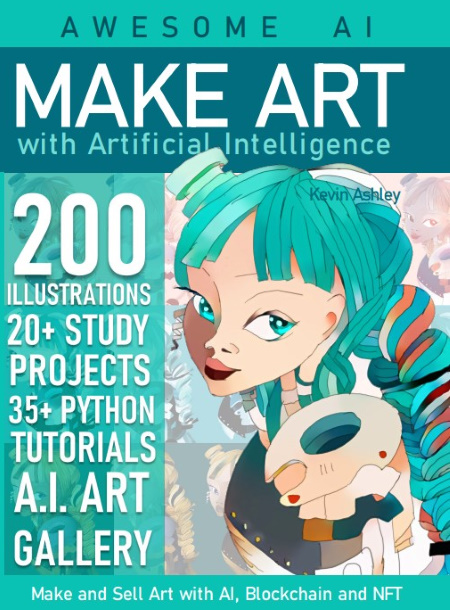




Artificial intelligence can help you be more creative and productive in a number of ways. For example, it can help you come up with ideas faster, improve your problem-solving skills, and become better at multitasking.

The eyes are not only the window to the soul, but can also reveal a person's innermost thoughts and feelings. The primary visual cortex is responsible for vision, and the retina is the light-sensitive tissue at the back of the eye. The optic nerve transmits information from the eye to the brain. Color vision is mediated by cone cells in the retina.

AI has not yet reached the level of general intelligence of humans, but it has been able to outperform humans in specific domains such as chess and Go. Some experts believe that AI will eventually play an important role in solving humanity's grand challenges, such as climate change and disease. However, there are some concerns about the future of AI, with some people worried about the potential for AI to be used for harm.

The history of artificial intelligence (AI) can be traced back to the 1950s, when the first Turing test was successfully completed. Since then, AI research has steadily progressed, leading to the development of increasingly sophisticated AI systems. In 1997, Deep Blue became the first AI system to beat a world champion at chess, and in 2011, IBM's Watson system won the game show Jeopardy ! against human champions.

Deep learning is a branch of machine learning that is concerned with algorithms that learn from data that is too unstructured or too complex for traditional machine learning methods. A deep learning algorithm called a deep neural network can be used to automatically recognize patterns in data. Deep learning is a relatively new field of artificial intelligence and is constantly evolving.

Artificial intelligence can help you be more creative by providing new ideas and perspectives, filtering and structuring information, finding new connections between ideas, and exploring different options and outcomes.

The average person spends about 3 years of their life dreaming. Dreams can help you process your emotions and solve problems. You can have different types of dreams, including nightmares, daydreams, and lucid dreams. Some people remember their dreams, while others don't. Dreams have been studied for centuries and there is still much we don't know about them.

Throughout history, robots have been created for a variety of purposes, from entertainment to labor. Early robots were simple automata, but more sophisticated designs emerged in the 14th century. As technology progressed, industrial robots became increasingly common in factories. In the 21st century, robots are being developed for more personal applications, such as assisting and companionship.